
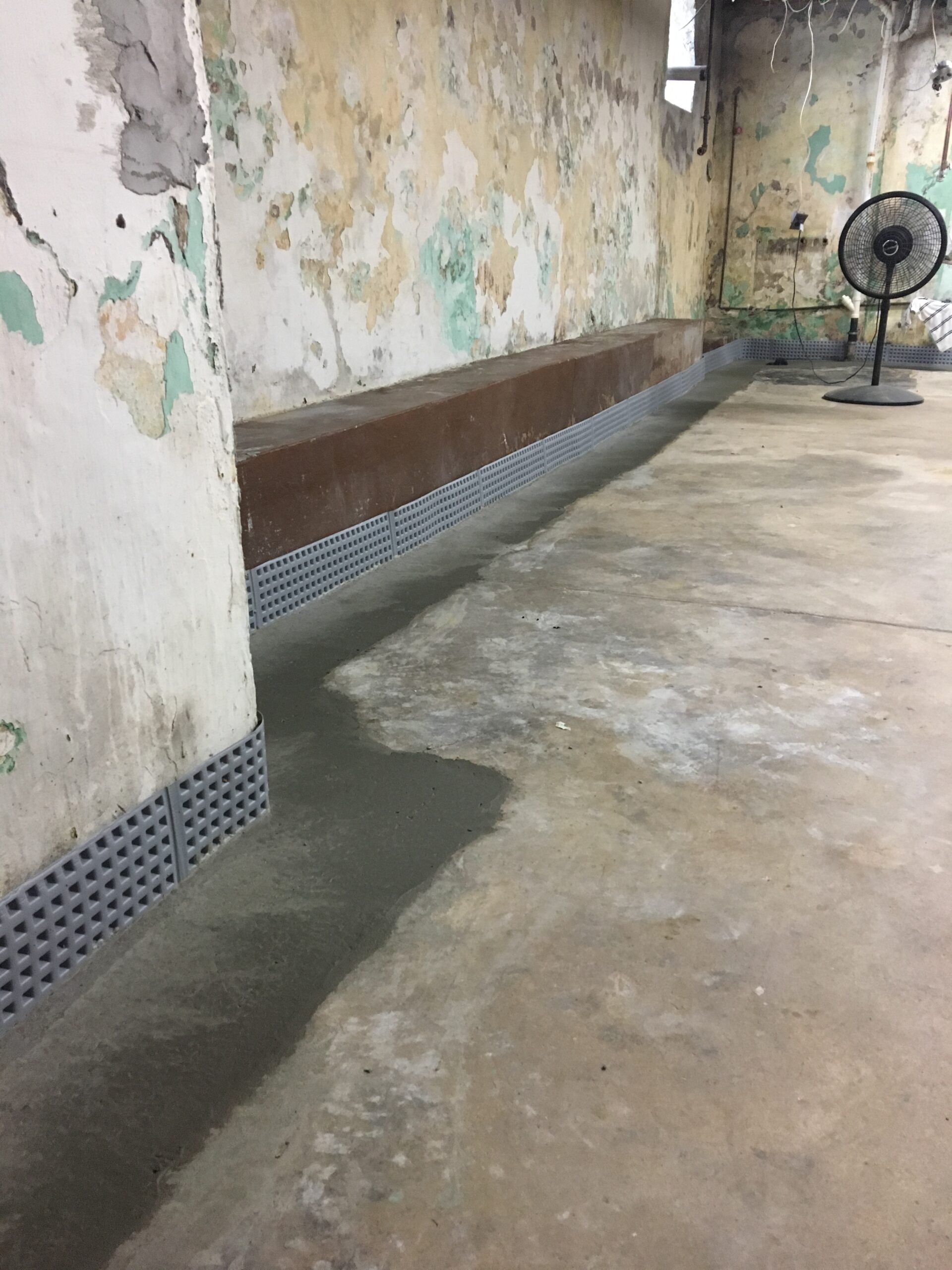
You paid for waterproofing, the puddles stopped, and yet the basement still has that musty smell. It’s frustrating, because it feels like the job didn’t work.
Here’s the catch: waterproofing often stops bulk water, but it doesn’t automatically fix damp air, hidden moisture, or old mold trapped in materials. The good news is that most “still musty” basements don’t need a full redo. They need a short, targeted checklist to (1) find the moisture source and (2) remove the odor source.
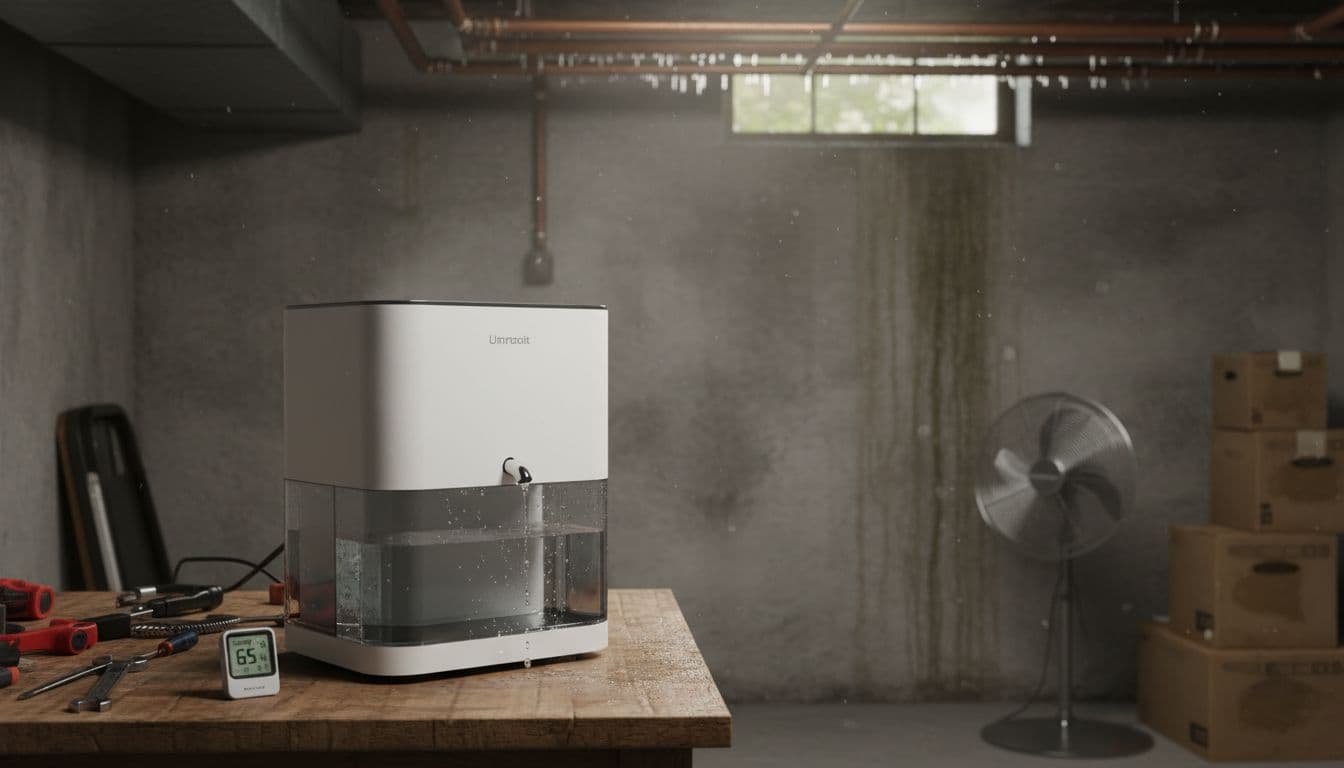
Humidity control tools in a basement setup, created with AI.
That musty odor is usually mold or mildew gases. They don’t need standing water, they need humidity. Many basements sit above 50% relative humidity even when walls look dry, and mold can ramp up fast once you hit the 50 to 60% range. A smart target is 30 to 50%.
Basements trap damp air because they’re cooler, have less air movement, and have lots of cold surfaces (pipes, concrete, steel beams). When warm air hits those cold surfaces, you get condensation, like a cold drink sweating on a summer day.
Use a small hygrometer and take readings (1) mid-room, (2) near an exterior wall, and (3) near the floor. Check again after a heavy rain. If you see water beads on pipes, a damp rim around the slab edge, or that “cool and clammy” feel, humidity and condensation are likely driving the smell.
Run a properly sized dehumidifier (many damp basements need roughly 20 to 30 pints per day per 500 sq ft). Place it more central, keep the filter clean, and add airflow (a box fan helps). Watch your hygrometer for a full week. If it stays under 50%, you’re winning.
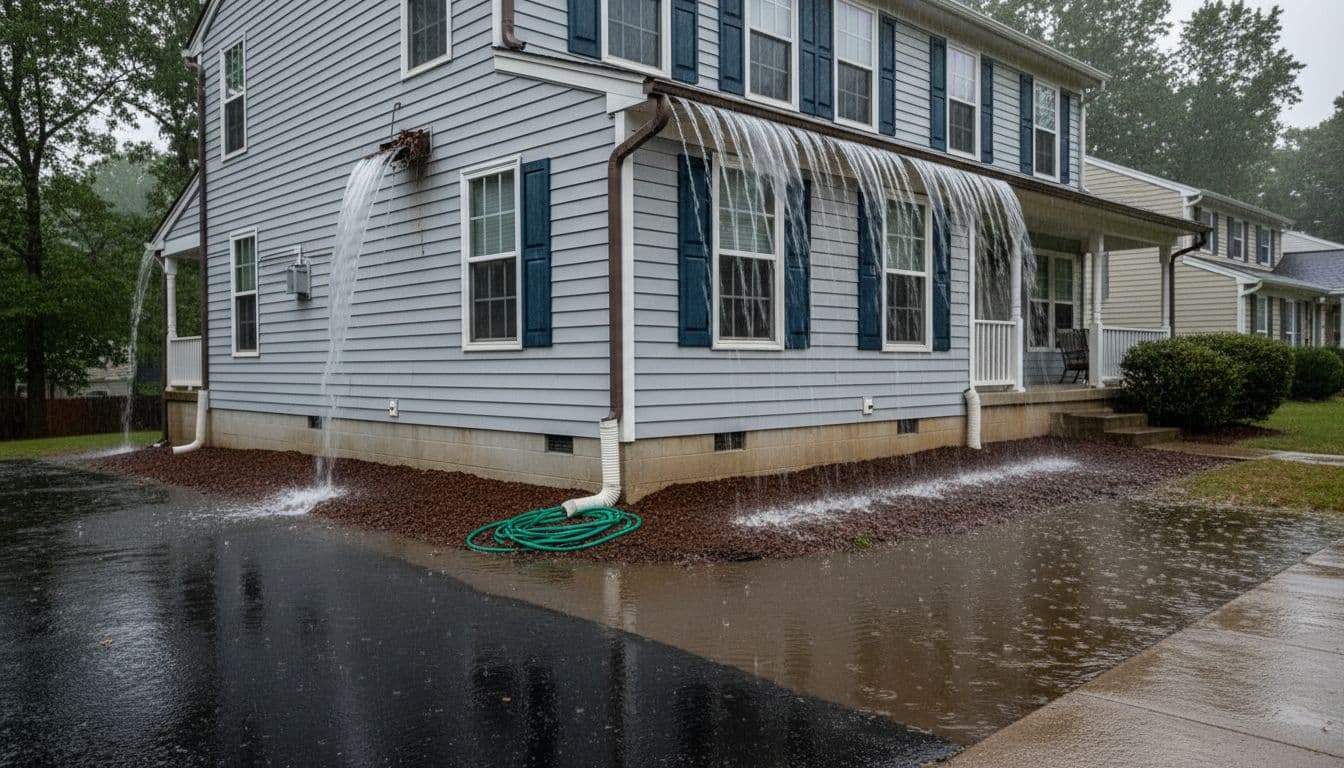
Outside drainage problems that push moisture toward a foundation, created with AI.
A basement can smell musty with no obvious leak because moisture is sneaking in through small pathways or being pushed against the foundation from outside. Think of waterproofing like a raincoat, it helps, but if water keeps pooling at your feet, you still get wet.
Clogged gutters overflow right at the foundation line. Downspouts that dump water next to the house can keep the soil soaked for days. Fixes are simple: clean gutters, extend downspouts 5 to 10 feet away, and re-grade soil so it drops about 1 inch per foot for 6 feet away from the house.
Moisture loves the wall to floor joint (the cove joint), porous concrete, and window wells. Look for damp edges, white chalky residue, rusty metal, peeling paint, and musty corners near basement windows. Also check your sump. A loose or open lid can spill humid air into the room even when the pump works fine.
 Photo by Enrico Hänel
Even after moisture is controlled, the smell can hang on because mold has moved into materials: drywall paper, wood framing, carpet padding, insulation, stored cardboard, and clutter pressed against walls. Finished basements can hide it behind baseboards or inside wall cavities.
Pull out wet carpet and padding, toss damp boxes, and clean hard surfaces. Then dry aggressively with fans plus a dehumidifier until readings stay in range. If the moldy area is large (around 10 square feet or more), keeps returning, or anyone has asthma or allergies, bring in a qualified mold pro.
If your basement still smells musty after waterproofing, follow this order: control humidity, block hidden moisture entry (start with drainage and joints), then remove odor sources that already got contaminated. Track humidity for two weeks, then recheck after a heavy rain. If levels stay high or damp spots return, it’s time to call a basement specialist to pinpoint the source.